Business Name: FootPrints Home Care
Address: 4811 Hardware Dr NE d1, Albuquerque, NM 87109
Phone: (505) 828-3918
FootPrints Home Care
FootPrints Home Care offers in-home senior care including assistance with activities of daily living, meal preparation and light housekeeping, companion care and more. We offer a no-charge in-home assessment to design care for the client to age in place. FootPrints offers senior home care in the greater Albuquerque region as well as the Santa Fe/Los Alamos area.
4811 Hardware Dr NE d1, Albuquerque, NM 87109
Business Hours
Monday thru Sunday: 24 Hours
Facebook: https://www.facebook.com/FootPrintsHomeCare/
Instagram: https://www.instagram.com/footprintshomecare/
LinkedIn: https://www.linkedin.com/company/footprints-home-care
Caregiver burnout seldom arrives with a single significant minute. It creeps in on quiet Tuesdays, on the 5th night in a row you're up at 2 a.m., on the early morning you understand you forgot your own dental visit again. Many family caretakers enter the function out of love and responsibility. They learn to manage medication calendars, weird insurance mail, and difficult transfers from bed to chair. The job can be deeply significant. It can likewise grind somebody down, specifically if the care needs outpace what a single person can sustainably offer at home.
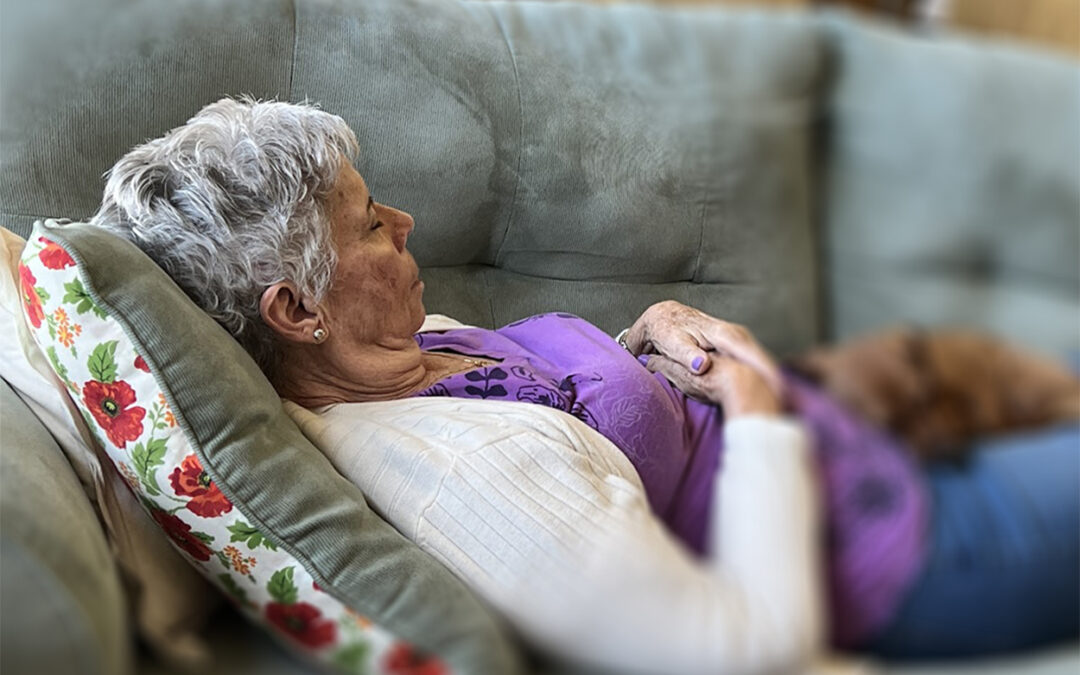
There is no universal threshold for when assisted living ends up being the much better option. Households get tangled in guilt, guarantees made long ago, and finances that do not stretch as far as they hope. The goal here is not to push a choice, but to provide an experienced lens. I have actually dealt with households who thrived with in-home senior look after years, and others who waited too long to think about a community, risking security for both the elder and the caretaker. Understanding the warning signs, understanding the trade-offs, and drawing up incremental steps will assist you make a sound option before a crisis forces your hand.
What burnout truly appears like in day-to-day life
Burnout isn't simply feeling worn out. It's a sustained state where fatigue, cynicism, and reduced effectiveness become the standard. In caregiving, this typically appears as irritation at minor requests, skipping your own healthcare, and small errors that didn't happen before. I have actually seen committed children who might hint their mother through a shower unexpectedly freeze when the phone rings, since any new ask feels difficult. Spouses who handled intricate medication schedules for several years begin to miss refills. People who never snapped at their loved one find themselves curt, then ashamed.
The physical signs tend to be clear: weight modification, headaches, a back that pains long after the transfer is done, sleeping disorders coupled with daytime fog. The psychological ones can be harder to admit. You may feel caught, resentful, or numb. You inform yourself this is simply a phase, then discover it hasn't lifted in months. If the individual you're looking after has dementia, repeat questions can seem like sandpaper on the nerves, even when you understand it's the disease talking. Burnout does not imply you love less. It indicates you have actually been fulfilling requirements at a level that exceeds your reserves.
The safety equation: when home is not much safer anymore
Families often correspond remaining at home with safety and convenience. Often that holds true. In some cases it quietly turns. I think of a gentleman with Parkinson's whose partner insisted on keeping him home after three falls in one month. Your house had 2 steps in between the kitchen and living-room, a narrow restroom, and scatter rugs throughout. Even with a walker and her watchfulness, he fell once again, this time with a head injury. He succeeded in rehabilitation, however what altered the trajectory was transferring to an assisted living neighborhood with broader hallways, a roll-in shower, and get bars where they in fact required to be. He kept his dignity, and she slept for the first time in months.
Telltale security red flags include frequent falls or near falls, wandering or exit-seeking, medication errors, weight-loss that suggests meals are getting avoided, and bathroom mishaps that become skin breakdown. If your loved one needs two people for safe transfers, yet you are often alone, you're improvising where you require redundancy. Even with exceptional elderly home care services, a single-story home with tight restrooms and limited guidance can become the incorrect tool for the task. Assisted living is not a medical facility, but many neighborhoods are constructed to reduce the precise threats that trip families up at home.
The guarantee made years ago
Many caretakers remember a promise, in some cases made decades earlier: "I'll never put you in a home." Those words weigh heavily. The objective behind them is commitment, not a binding agreement to neglect altering realities. The phrase "a home" also indicates something various now. Modern assisted living ranges extensively. Some neighborhoods feel medical. Others seem like a well-run apartment with extra assistance, chef-prepared meals, a yard, and a nurse down the hall. I have actually walked into locations where a resident's preferred pet sees weekly, where the personnel keeps in mind birthdays without triggering, and where the regulars understand precisely who cheats at bingo.
There is a difference between a pledge to prevent abandonment and a pledge to deliver every minute of care personally. You can keep the very first even if you modify the second. Many households reframe the promise together: we will ensure you're safe, looked after, and not alone. Whether that care takes place through senior home care at your kitchen table or with compassionate staff in a brilliant, bustling dining-room is a detail that can be adjusted without breaking faith.
Measuring the load: jobs, hours, and hidden labor
Caregivers ignore the hours they work because a lot of it is undetectable. Toileting aid might take five minutes, but you're on alert every hour, which frays concentration. If you tally concrete tasks and guidance time, numerous caretakers put in 40 to 80 hours a week. Include middle-of-the-night look after incontinence or sundowning agitation and your body never ever totally powers down.
If you're providing individual care like bathing and dressing, plus medication management and all the family tasks, your load beings in what professionals call "high skill." Families can redeem hours through home care service firms. A few early mornings a week of in-home care to cover showers and breakfast can support things for a while. Overnight caregivers can reclaim your sleep, though the expense accumulates quick. When needs move beyond regular help into two-person transfers, advanced dementia behaviors, or continuous cueing, assisted living frequently delivers more constant coverage at a lower price than 24/7 care at home.
Money, options, and the math that frequently surprises people
People presume assisted living always costs more than staying at home. In some cases it does. If your loved one needs 8 or less hours of in-home care per week, and household fills the rest, home likely wins on expense. As care needs climb, the numbers alter. In numerous regions, assisted living varieties from roughly $4,000 to $8,000 per month, with memory care higher. Round-the-clock at home senior care can quickly surpass $18,000 each month if staffed through a company. Hiring privately may be more affordable, but it moves liability, scheduling headaches, and payroll tax onto the family. There's no perfect choice, only a transparent one.
Beyond the checkbook, weigh chance expense. Caretakers often scale back work or retire early. Lost earnings, stalled career development, and health effects from persistent stress rarely get included into the tally. I've seen nurses leave the bedside to care for a parent, then struggle to reenter the workforce years later on. I have actually also seen households bridge the space with creative options: shared caregiving amongst brother or sisters with a schedule that really holds, respite remain in assisted living that offer a preview without a full commitment, and mixed models where home care covers key hours and an adult day program offers structure and social time during the day.
What assisted living can do that a home frequently cannot
The finest assisted living communities are built around predictable assistance. They have personnel trained to hint or help with bathing, dressing, and meals. Medication management lowers the threat of missed out on doses or duplications. Physical environments are designed for movement and dementia-friendly navigation. There are eyes on citizens throughout the day, which matters even when a person is independent in the early morning however struggles in the afternoon.
There's also the social layer. Seclusion is a slow damage. A widower who hasn't had a real discussion in days will frequently liven up in a neighborhood where coffee chat and corridor hellos become regular. I enjoyed one peaceful former instructor become the unofficial newsletter editor in her new home. Her son, who had actually pursued months to organize card nights in the house, was stunned to see how quickly she accepted a standing bridge game once she might stroll down the hall rather than wait on a cars and truck ride.
Communities are not ideal. Staff turnover takes place. An excellent activity program can be undercut by poor follow-through. Food quality differs. What matters is in shape and responsiveness. The best location feels like it understands your individual rather than funneling everybody into the same schedule.
When home care still shines
Home is still the best option for many people, particularly when the environment can be adjusted, the care requirements are stable, and you can assemble dependable assistance. Installing a 2nd handrail, getting rid of throw rugs, and adding a shower chair can decrease falls. A medication dispenser with alarms can help a detail-oriented senior keep control with oversight. In-home care employees can manage showers and meal preparation while you keep the relationship functions you treasure: daughter, other half, good friend. For somebody with strong neighborhood ties, a beloved patio, and steady cognition, there is no factor to rush a move.
The edge cases are essential. A person with early Parkinson's who follows workout routines may do better at home with targeted home therapy and a weekly caregiver than in a community where staff are stretched thin. An increasingly private individual who becomes agitated around unfamiliar faces may stabilize with one consistent assistant and a calm area. On the other hand, somebody with advancing dementia who starts to roam, or who needs 24-hour cueing, is much safer with structured guidance than with a patchwork of visitors and a door alarm.
A simple yardstick for decision-making
Families often feel paralyzed by completing aspects. A straightforward yardstick can break the logjam. Ask 3 concerns and address honestly:
- Is the present setup safe, and will it likely stay safe for the next three to six months? Is the primary caretaker's health stable, with time for sleep, medical appointments, and some personal life? Are the person's social and emotional needs being met most days, not just their basic hygiene?
If you can not state yes to a minimum of two of these, you likely need to add significant support immediately, either by broadening home care hours or by exploring assisted living. If you can not state yes to any of them, you are currently in a crisis stage. A relocation or a major shift in care shipment must be on the table now, not after the next fall or hospitalization.
The psychological hurdle: guilt, grief, and shifting identity
Guilt is a lousy navigator. It will keep you parked in the exact same area out of fear you're failing somebody. When a move becomes the safer, kinder choice, guilt typically signifies sorrow in disguise. You're grieving the life you had together, the guarantee of your own plans, the steady reliability of the person who now needs you in methods you didn't imagine. That grief is real whether your loved one stays home or moves.
Caregivers who pick assisted living frequently stress they'll lose their role. What usually happens is a function shift. You move from hands-on assistant to promote and companion. You still visit, to talk, to share a meal, to walk the yard when weather is good. The staff handles the showers and the linen changes. You manage the stories, the household images, the little luxuries that make your person feel like themselves. Many caretakers explain the relief of getting their relationship back, because the time they spend together isn't dominated by tasks.
How to evaluate assisted living without getting overwhelmed
Take the time to see a neighborhood at its most ordinary. Marketing trips are polished, which is reasonable, but you learn more by showing up around a meal or activity and enjoying the interactions. Are citizens sitting alone in the lobby, or are there clusters of discussion? Do staff greet individuals by name? How does it odor in the hallways after lunchtime? Little details expose day-to-day realities.
Ask about staffing ratios, but listen also for how groups flex when someone is out sick. Exist constant aides on each hall, or is coverage constantly turning? Look at bathrooms and shower areas; they inform you more about upkeep than the lobby. Examine the yard gate. Does it latch firmly, yet open quickly for a slow walker? If memory care is in the image, inquire about their prepare for nighttime wandering. A scripted answer is great; a practical one is better.
Families often ask me for one killer concern to sort the good from the mediocre. Here's my favorite: tell me about a recent mistake and what you altered due to the fact that of it. Every neighborhood makes errors. The excellent ones learn and change. The weak ones deflect.
The blended technique: relieving the transition
You do not have to select all at once. Many assisted living communities use respite remains that last a week or a month. This can provide a caretaker time to recuperate from surgery or burnout and uses the older grownup a trial run. I've seen proud holdouts enjoy the group exercise class and start calling staff by name within days, even if they swore they would never ever leave their home. I've likewise seen trial remains confirm that home is still the ideal fit, with a restored focus on adding in-home look after the trickiest hours.
If you progress, offer it time. The very first two weeks are often the hardest, an assortment of new regimens and disorientation. Bring familiar objects: a preferred chair, quilt, family images at eye level. Label closets and drawers with basic signs. Visit at various times of day to get a sense of rhythms and to assure your loved one without crowding the staff. Set one or two top priorities with the care team rather than a long list. Maybe the morning medication window and a constant shower day are the anchors. Other choices can layer in when the basics stabilize.
When staying at home ends up being the more secure choice again
There are moments when a relocate to assisted living is not practical or not right, and the focus go back to enhancing care at home. This is especially true when someone is near the end of life or too medically intricate for a typical assisted living setting. Hospice can be layered onto home care to bring a nurse, social employee, and bath aide into the mix, often covered by insurance coverage. The hospice group addresses pain, signs, and emotional assistance, while at home caregivers handle day-to-day jobs. Households who pick this route require a clear prepare for nights, for emergency situations, and for backup if the main caregiver gets sick.
Technology has a role, however it's not a panacea. Door sensors, medication dispensers, and video call check-ins assist, yet they can not change a human hand during a fall or confusion at 3 a.m. Use tech to fill gaps, not to mask an unsafe setup.
Two real stories, various paths
A sibling and sis took care of their mother with mid-stage Alzheimer's in her small cattle ranch house. They alternated nights, each taking three per week, then switching Sundays. They hired senior home look after three hours each early morning to cover bathing and prepare breakfast. The routine held till roaming started. A next-door neighbor discovered their mother two blocks away at dawn. After 2 scares, they moved her to a memory care wing where she slept through the night more frequently and invested afternoons folding towels with personnel, humming to old tunes. The brother or sisters still went to daily, now they showed up rested, prepared to stroll the garden or sit with ice cream in the neighborhood coffee shop. Their relationship enhanced, and so did hers.
Contrast that with a retired couple where the partner had early-stage Parkinson's. He was sharp, determined, and devoted to exercise. They personalized your home, including grab bars and eliminating thresholds. He went to a boxing class two times a week and had a home aide 3 early mornings a week for shower security. They thought about assisted living but selected to stay at home because his needs were specific and foreseeable. Three years later, they reassessed. When his balance intensified and his better half struggled with over night care, they reviewed assisted living with far less fear, since they had already talked about the "if not now, when" plan.
If you are nearing a breaking point
Burnout feels isolating. It is not a moral stopping working to require a break or to change the plan. If you're at the edge, take one small decisive action today. Call your medical care service provider and be honest about your stress; your health matters. Reach out to a reliable home care agency and interview them, even if you aren't prepared to book hours yet. Tour one assisted living community and take notes, just to have a baseline. Send out a group text to brother or sisters or trusted pals requesting concrete aid for the next two weeks: trips, meals, or sitting with your loved one so you can snooze. Little moves build momentum.
What to ask a home care service or assisted living provider
Choosing partners in care resembles employing for a vital task. You want clarity and character, not just a sales pitch.
- How do you match caretakers to customers or citizens, and what occurs if the fit isn't right? What training do personnel receive for dementia habits, movement help, and medication management? How do you interact day-to-day updates with households, and who is the point individual for concerns? What's your plan for emergencies at 2 a.m., and how do you personnel nights and weekends? Can you share an example of feedback you got and a change you made due to the fact that of it?
Listen for specifics. Vague answers generally result in unclear follow-through.
The peaceful criteria that matters most
Strip away the marketing language and the guilt, and one procedure stays: does the care strategy permit both of you to live a life that feels human? That suggests the older adult is safe, fairly comfortable, and connected to others. It likewise suggests the senior caregiver can sleep, keep their own health, and have moments of delight that aren't edged with dread. If in-home care and family routines deliver that, keep going and reassess regularly. If burnout is the norm and security is precarious, assisted living may not be a surrender. It might be an act of love that expands what's possible for both of you.
The finest choices show up before the crisis does. They originate from honest self-appraisal, a clear-eyed take a look at money and risk, and regard for the individual at the center of it all. Whether you pick senior home care, an https://andersonukpj722.lucialpiazzale.com/elderly-home-care-vs-assisted-living-staffing-ratios-and-caregiver-training assisted living apartment or condo with sunlight streaming in at breakfast, or a blended course that alters in time, go for a strategy that you can sustain. Caregiving is a marathon. The ideal assistance is not an extravagance. It is the factor you'll be there at the finish line, present and whole.
FootPrints Home Care is a Home Care Agency
FootPrints Home Care provides In-Home Care Services
FootPrints Home Care serves Seniors and Adults Requiring Assistance
FootPrints Home Care offers Companionship Care
FootPrints Home Care offers Personal Care Support
FootPrints Home Care provides In-Home Alzheimer’s and Dementia Care
FootPrints Home Care focuses on Maintaining Client Independence at Home
FootPrints Home Care employs Professional Caregivers
FootPrints Home Care operates in Albuquerque, NM
FootPrints Home Care prioritizes Customized Care Plans for Each Client
FootPrints Home Care provides 24-Hour In-Home Support
FootPrints Home Care assists with Activities of Daily Living (ADLs)
FootPrints Home Care supports Medication Reminders and Monitoring
FootPrints Home Care delivers Respite Care for Family Caregivers
FootPrints Home Care ensures Safety and Comfort Within the Home
FootPrints Home Care coordinates with Family Members and Healthcare Providers
FootPrints Home Care offers Housekeeping and Homemaker Services
FootPrints Home Care specializes in Non-Medical Care for Aging Adults
FootPrints Home Care maintains Flexible Scheduling and Care Plan Options
FootPrints Home Care is guided by Faith-Based Principles of Compassion and Service
FootPrints Home Care has a phone number of (505) 828-3918
FootPrints Home Care has an address of 4811 Hardware Dr NE d1, Albuquerque, NM 87109
FootPrints Home Care has a website https://footprintshomecare.com/
FootPrints Home Care has Google Maps listing https://maps.app.goo.gl/QobiEduAt9WFiA4e6
FootPrints Home Care has Facebook page https://www.facebook.com/FootPrintsHomeCare/
FootPrints Home Care has Instagram https://www.instagram.com/footprintshomecare/
FootPrints Home Care has LinkedIn https://www.linkedin.com/company/footprints-home-care
FootPrints Home Care won Top Work Places 2023-2024
FootPrints Home Care earned Best of Home Care 2025
FootPrints Home Care won Best Places to Work 2019
People Also Ask about FootPrints Home Care
What services does FootPrints Home Care provide?
FootPrints Home Care offers non-medical, in-home support for seniors and adults who wish to remain independent at home. Services include companionship, personal care, mobility assistance, housekeeping, meal preparation, respite care, dementia care, and help with activities of daily living (ADLs). Care plans are personalized to match each client’s needs, preferences, and daily routines.
How does FootPrints Home Care create personalized care plans?
Each care plan begins with a free in-home assessment, where FootPrints Home Care evaluates the client’s physical needs, home environment, routines, and family goals. From there, a customized plan is created covering daily tasks, safety considerations, caregiver scheduling, and long-term wellness needs. Plans are reviewed regularly and adjusted as care needs change.
Are your caregivers trained and background-checked?
Yes. All FootPrints Home Care caregivers undergo extensive background checks, reference verification, and professional screening before being hired. Caregivers are trained in senior support, dementia care techniques, communication, safety practices, and hands-on care. Ongoing training ensures that clients receive safe, compassionate, and professional support.
Can FootPrints Home Care provide care for clients with Alzheimer’s or dementia?
Absolutely. FootPrints Home Care offers specialized Alzheimer’s and dementia care designed to support cognitive changes, reduce anxiety, maintain routines, and create a safe home environment. Caregivers are trained in memory-care best practices, redirection techniques, communication strategies, and behavior support.
What areas does FootPrints Home Care serve?
FootPrints Home Care proudly serves Albuquerque New Mexico and surrounding communities, offering dependable, local in-home care to seniors and adults in need of extra daily support. If you’re unsure whether your home is within the service area, FootPrints Home Care can confirm coverage and help arrange the right care solution.
Where is FootPrints Home Care located?
FootPrints Home Care is conveniently located at 4811 Hardware Dr NE d1, Albuquerque, NM 87109. You can easily find directions on Google Maps or call at (505) 828-3918 24-hoursa day, Monday through Sunday
How can I contact FootPrints Home Care?
You can contact FootPrints Home Care by phone at: (505) 828-3918, visit their website at https://footprintshomecare.com, or connect on social media via Facebook, Instagram & LinkedIn
Conveniently located near Cinemark Century Rio Plex 24 and XD, seniors love to catch a movie with their caregivers.